
How to Build a Professional Pickleball Court: Complete 2025 Guide

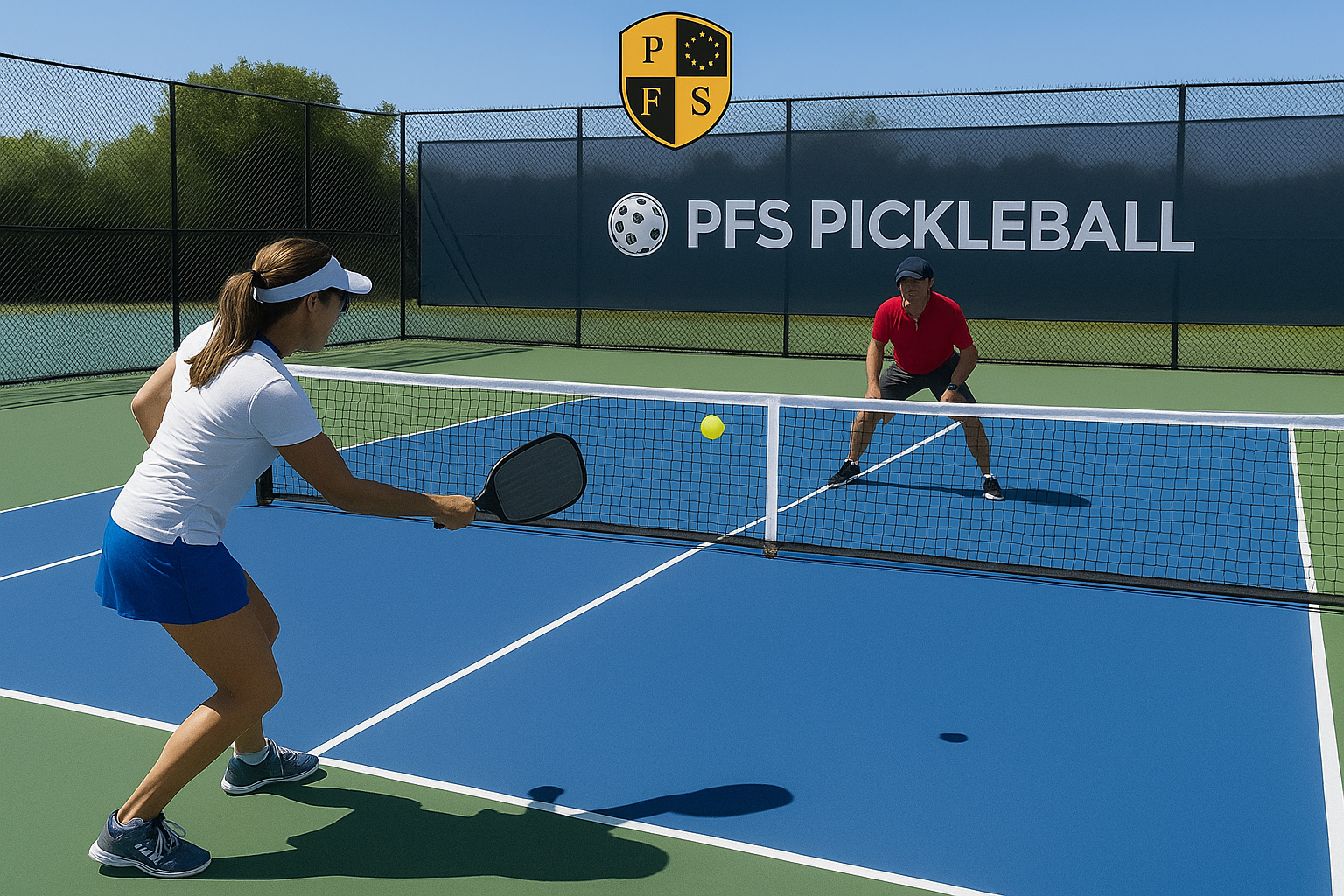
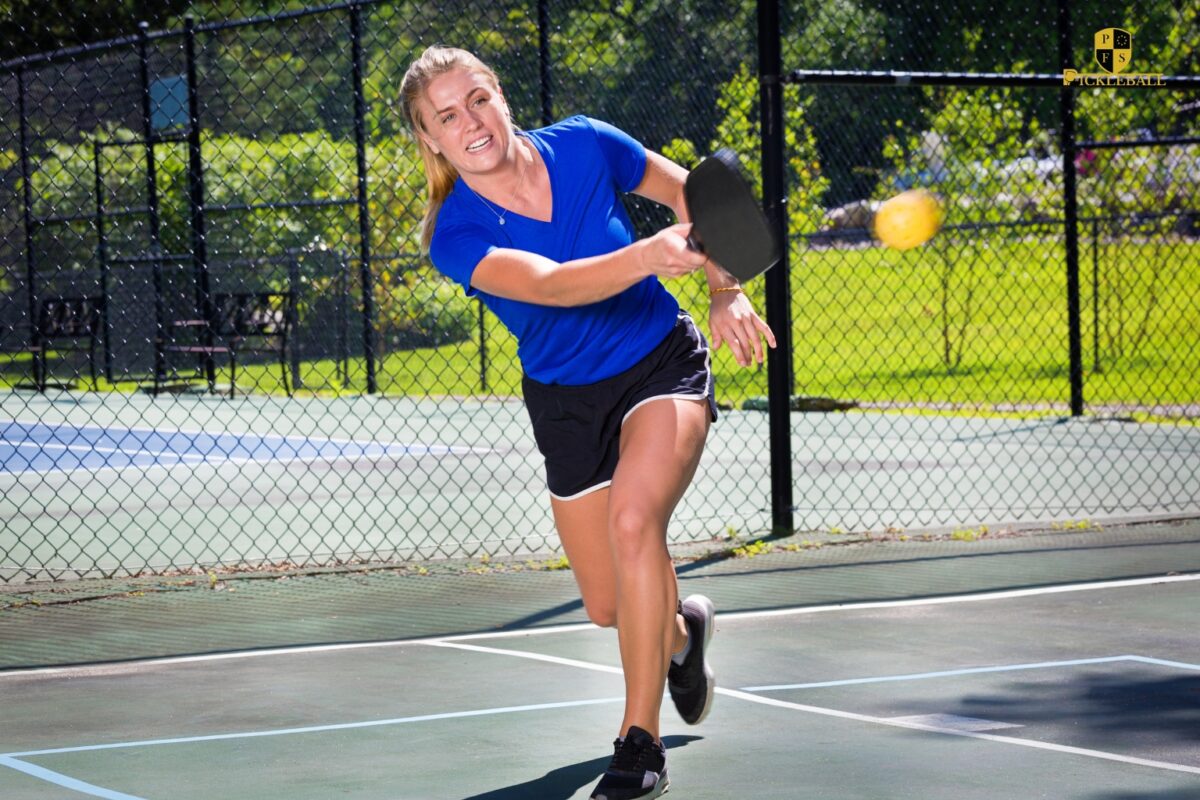
Pickleball has taken the world by storm — from luxury resorts to local clubs, everyone’s joining the game. But building a professional Pickleball Court isn’t just about painting lines on concrete. It’s about precision, quality, and compliance with global standards.
In this detailed 2025 guide, you’ll learn exactly how to build a professional-grade Pickleball Court — from dimensions and materials to cost, surfacing, and installation tips.
We’ll also explore how PFS Pickleball, a global leader in sports flooring, helps clubs, developers, and homeowners design world-class courts that last for decades.
Understanding the Basics of a Pickleball Court
Before construction begins, understanding what makes a Pickleball Court “professional” is key. The standard court size, surface texture, and marking dimensions all affect performance and safety.
Official Pickleball Court Dimensions
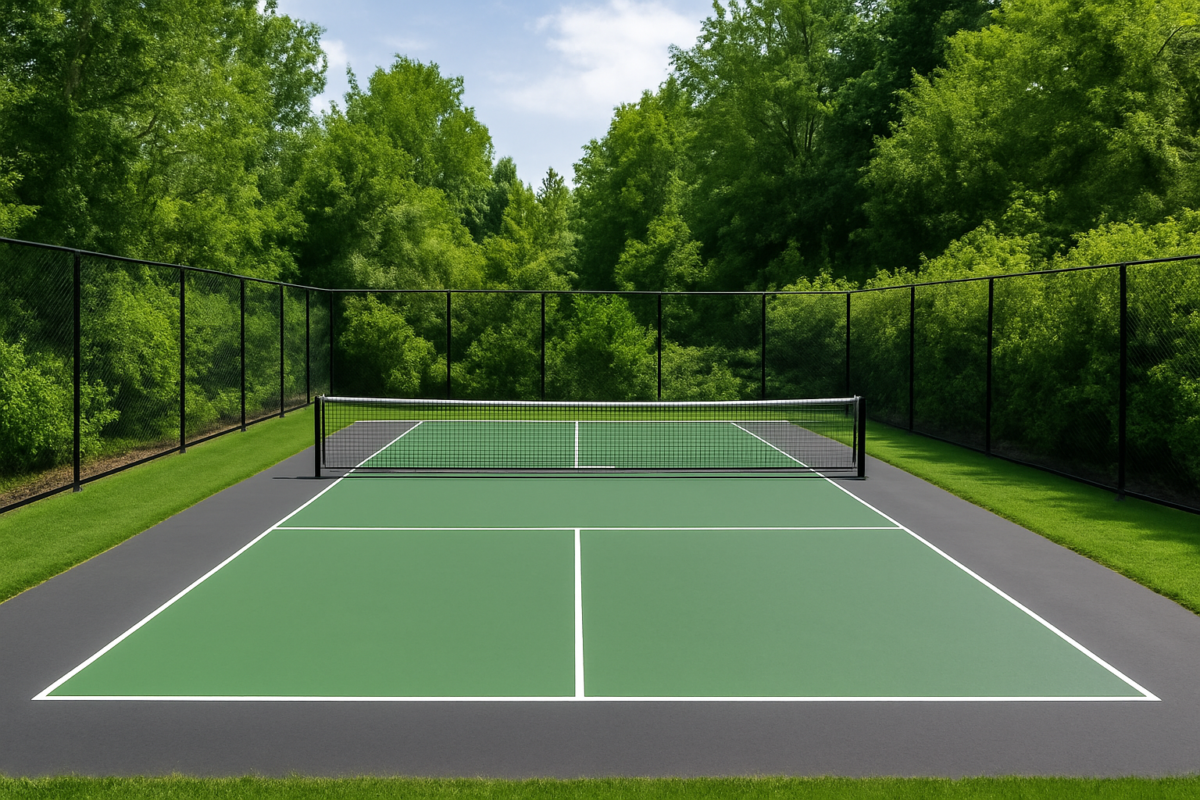
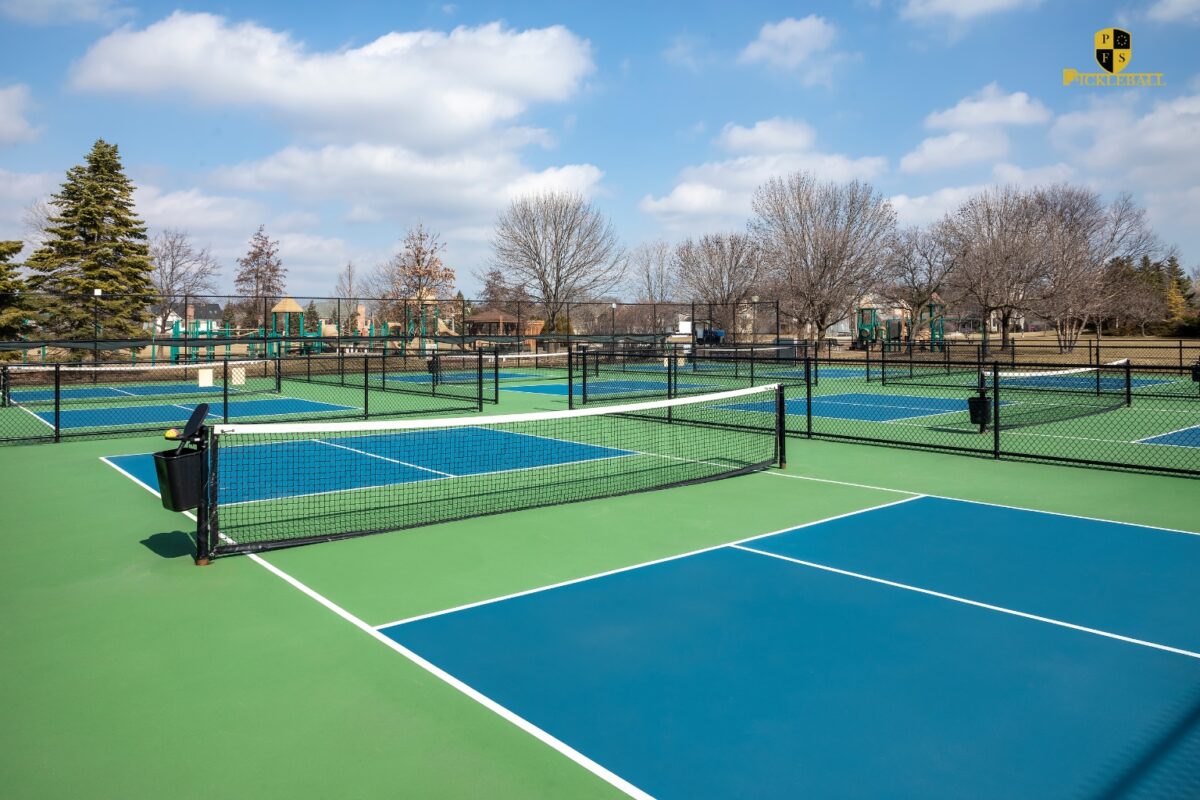
A standard Pickleball Court measures 44 feet long and 20 feet wide, including boundary lines. For safe play, a total area of around 30 feet × 60 feet is recommended to allow player movement and buffer zones.
Surface Requirements
Professional Pickleball Courts require:
A flat, non-slip surface
Consistent ball bounce
UV-resistant color coatings
Shock absorption for player safety
These features ensure a professional playing experience, reduce injuries, and enhance surface longevity.
Step-by-Step Process to Build a Professional Pickleball Court
Building a Pickleball Court involves several critical steps — from planning and design to surfacing and final line marking. Let’s break them down.
Step 1 – Site Selection and Preparation
Choose a location with proper drainage and a stable sub-base. Outdoor courts need sun exposure but minimal wind interference. The site should allow at least 30’ x 60’ of playable space with 1–2% surface slope for water runoff.
Step 2 – Constructing the Base
The base is the foundation of your Pickleball Court.
Concrete Base: Recommended for long-term durability.
Asphalt Base: Cost-effective but requires sealing.
PFS Pickleball recommends high-quality, level concrete bases that meet ±3mm flatness tolerance to ensure uniform bounce.
Step 3 – Applying the Surface System
This step defines how professional your court will feel.
PFS Pickleball offers three world-class surface systems:
-
Professional Acrylic System (1.8–2.2 mm): Ideal for competitive play.
-
Standing Acrylic System (3.5–5 mm): Perfect balance of comfort and durability.
-
Comfort Acrylic System (6–10 mm): Premium option with shock absorption for all-day play.
Each system is engineered with European technology and tested for UV resistance, elasticity, and anti-slip performance.
Step 4 – Painting & Line Marking
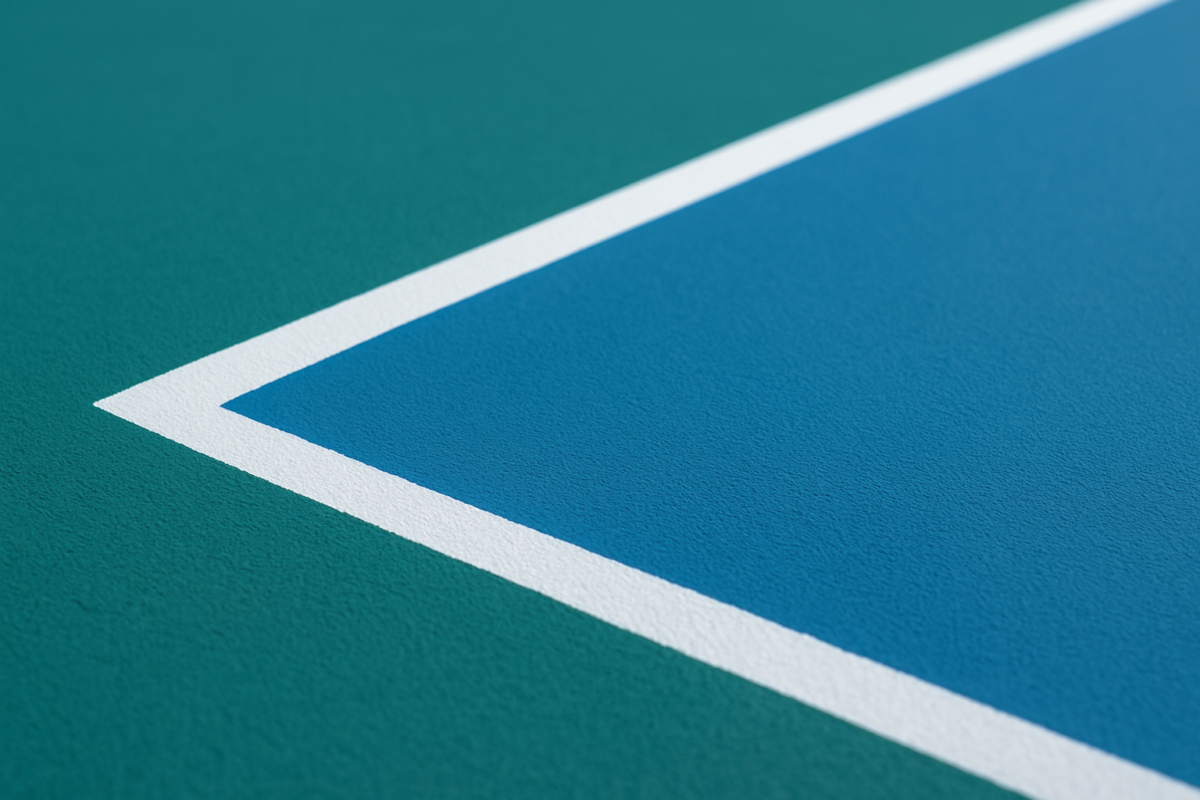
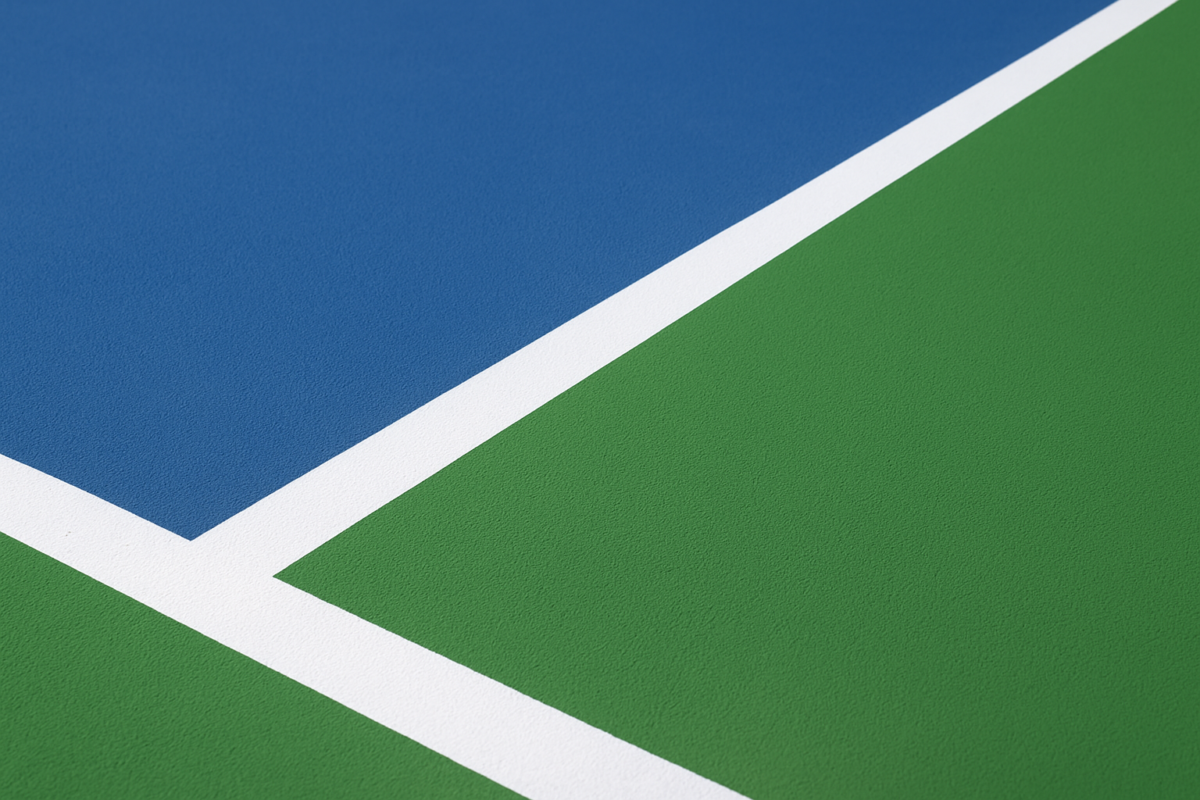
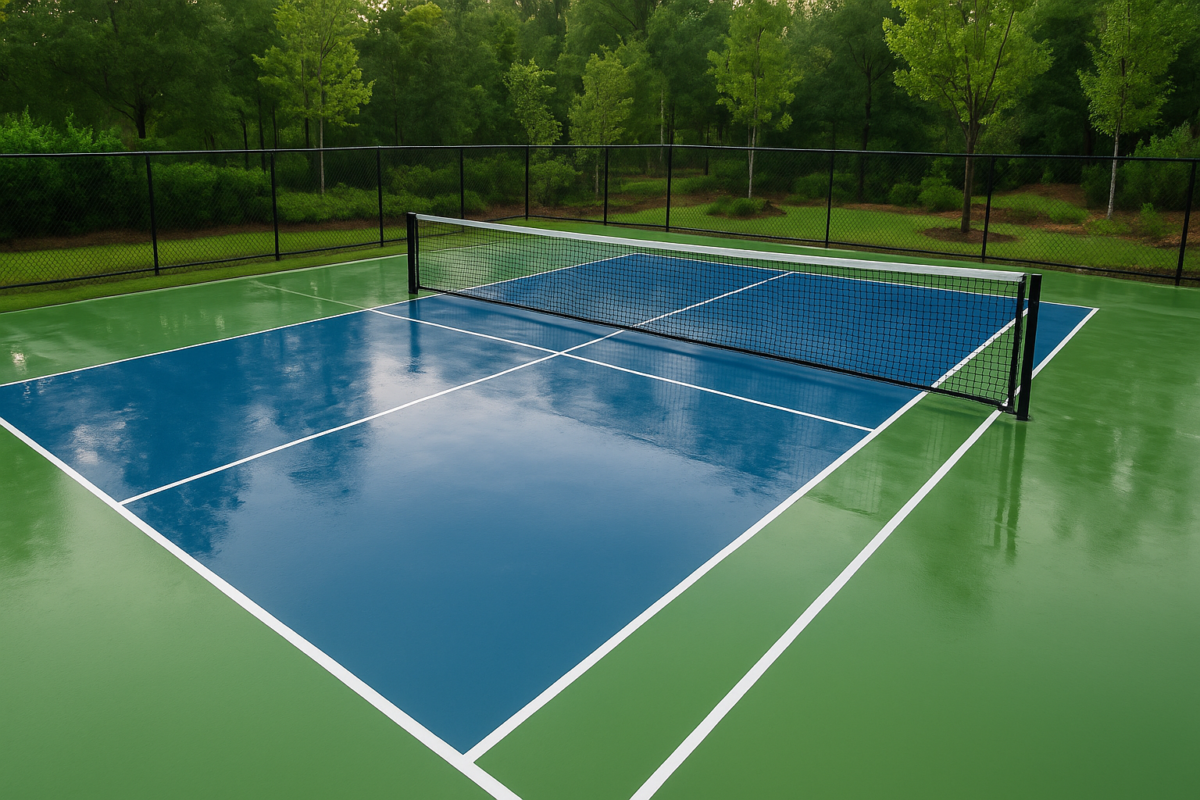
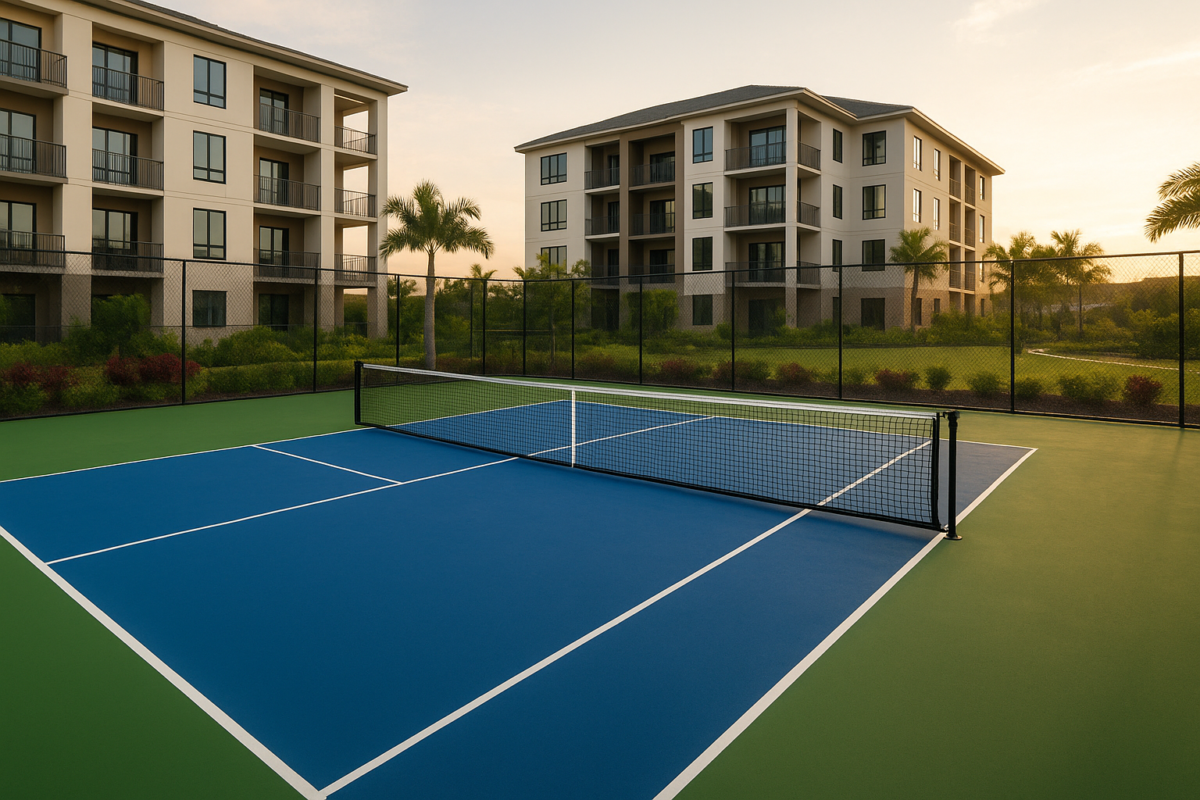
Use high-quality acrylic paints with non-glare finishes. Standard colors are green, blue, or terracotta. The white boundary lines should be 2 inches wide and precisely aligned to federation standards.
Step 5 – Net System Installation
Install a 34-inch net at the center and 36 inches at the posts. Stainless steel or powder-coated posts are ideal for outdoor weather resistance.
Step 6 – Lighting & Fencing
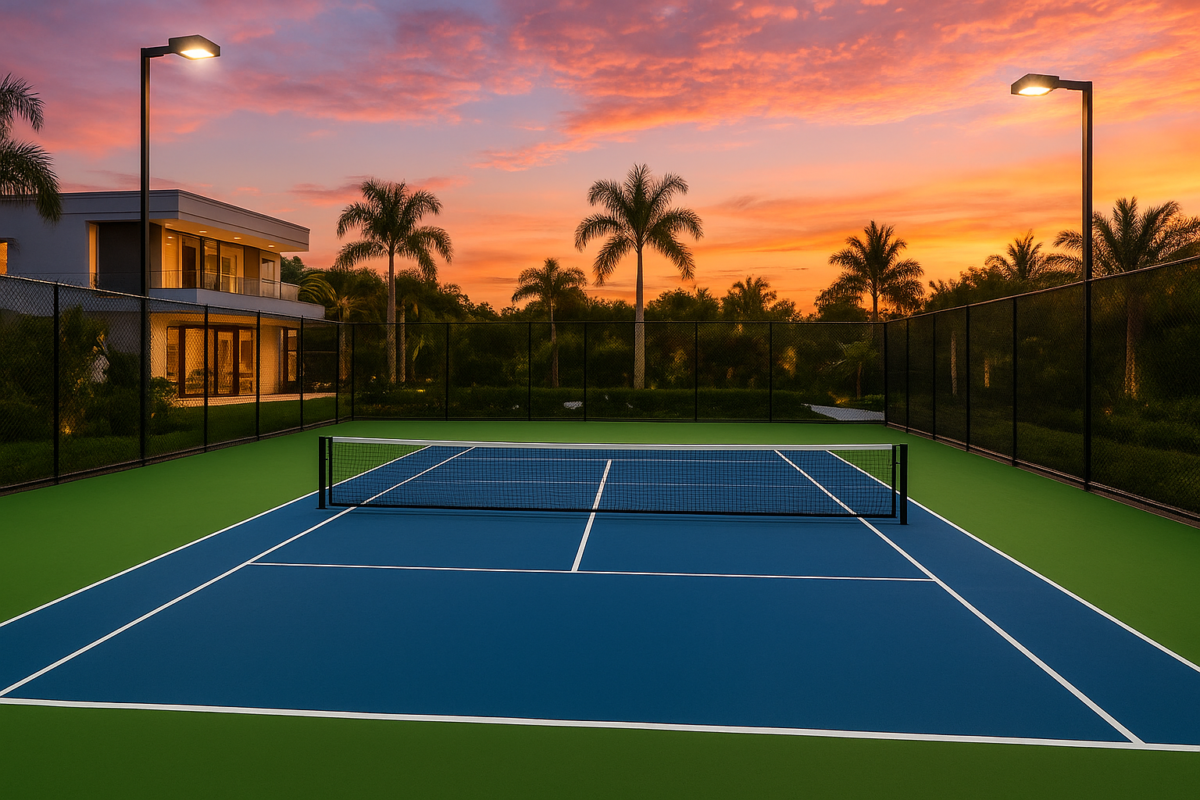
Proper lighting (minimum 30-foot candle intensity) enables night play. Use LED floodlights for energy efficiency.
Fencing around 10–12 feet high prevents ball loss and enhances safety.
Cost of Building a Pickleball Court in 2025
Key Cost Components
| Component | Estimated Cost (INR / USD Equivalent) |
|---|---|
| Base Construction | ₹3.5–5.5 lakh |
| Surfacing System | ₹2–4 lakh |
| Net & Posts | ₹30,000–₹60,000 |
| Fencing & Lighting | ₹1–2 lakh |
| Line Marking & Paint | ₹20,000–₹40,000 |
| Total Estimated Cost | ₹7–12 lakh ($8,000–$14,000) |
These costs may vary based on surface choice, location, and site preparation needs.
Pro Tip: When working with PFS Pickleball, you get manufacturer-direct pricing and international-grade materials — helping you save up to 20% compared to local contractors.
Why Choose PFS Pickleball for Your Court Construction
Global Engineering Meets Local Expertise
PFS Pickleball combines European manufacturing precision with local project support in over 30 countries — including India, the UAE, the UK, and the USA.
Their systems are engineered under the Pickleball Federation of America (PFA) and Global Pickleball Federation (GPF) standards.
Key Advantages of PFS Pickleball Courts
-
Certified non-slip, crack-resistant acrylic systems
-
10+ year lifespan under all-weather conditions
-
Custom color, logo, and branding options
-
Eco-friendly, low-VOC materials
-
Global shipping and local dealer installation support
By choosing PFS Pickleball, you’re not just building a court — you’re creating a professional sports experience that attracts players, tournaments, and members.
Maintenance Tips for Long-Lasting Pickleball Courts
To maintain your investment, follow these essential maintenance practices:
Clean Regularly
Sweep or wash the surface weekly to remove dust, leaves, and debris that can reduce traction or cause staining.
Check Drainage
Ensure water runoff systems remain unclogged. Stagnant water can weaken coatings over time.
Recoat When Needed
Reapply acrylic coatings every 3–5 years to maintain bounce consistency and vibrant colors.
Avoid Sharp Equipment
Keep heavy machinery, skates, or high-heeled shoes off the playing area to prevent surface scratches.
PFS Pickleball provides complete maintenance guidance to all customers, ensuring surfaces perform like new for years.
Customization and Branding Options
PFS Pickleball allows clients to personalize their courts with:
-
Custom color schemes and logo branding
-
Integration of sponsor names or club emblems
-
Tailored designs for multi-sport use (tennis + pickleball)
Whether it’s a luxury resort, sports academy, or residential club, a branded Pickleball Court adds aesthetic and commercial value to your property.
Sustainability and Innovation at PFS Pickleball
Modern court construction isn’t just about playability — it’s about responsibility.
PFS Pickleball uses eco-safe, low-VOC materials, recyclable packaging, and energy-efficient production.
Their systems are designed for maximum performance with minimum environmental impact — ensuring sustainable sports infrastructure for future generations.
Common Questions About Pickleball Court Construction
How long does it take to build a Pickleball Court?
Typically, 15–25 days depending on weather, surface choice, and base readiness.
Can I convert a tennis court into a Pickleball Court?
Yes, using PFS’s modular acrylic overlay systems, you can convert an existing tennis or badminton court easily.
What’s the best surface for beginners?
The Standing Acrylic System from PFS Pickleball offers perfect comfort and grip for all age groups.
Is indoor Pickleball different from outdoor?
Yes, indoor courts use slightly softer surfaces and lighter balls to minimize bounce variation.
Conclusion
Building a professional Pickleball Court in 2025 requires planning, precision, and high-quality materials. From selecting the right base to applying premium acrylic coatings, every step shapes the court’s longevity and play quality.
PFS Pickleball simplifies this process with global expertise, certified systems, and sustainable manufacturing — ensuring every court meets international standards and delivers unmatched performance.
Ready to build your dream Pickleball Court?
Visit PFS Pickleball to get a free consultation and professional quote today.