Court Layout
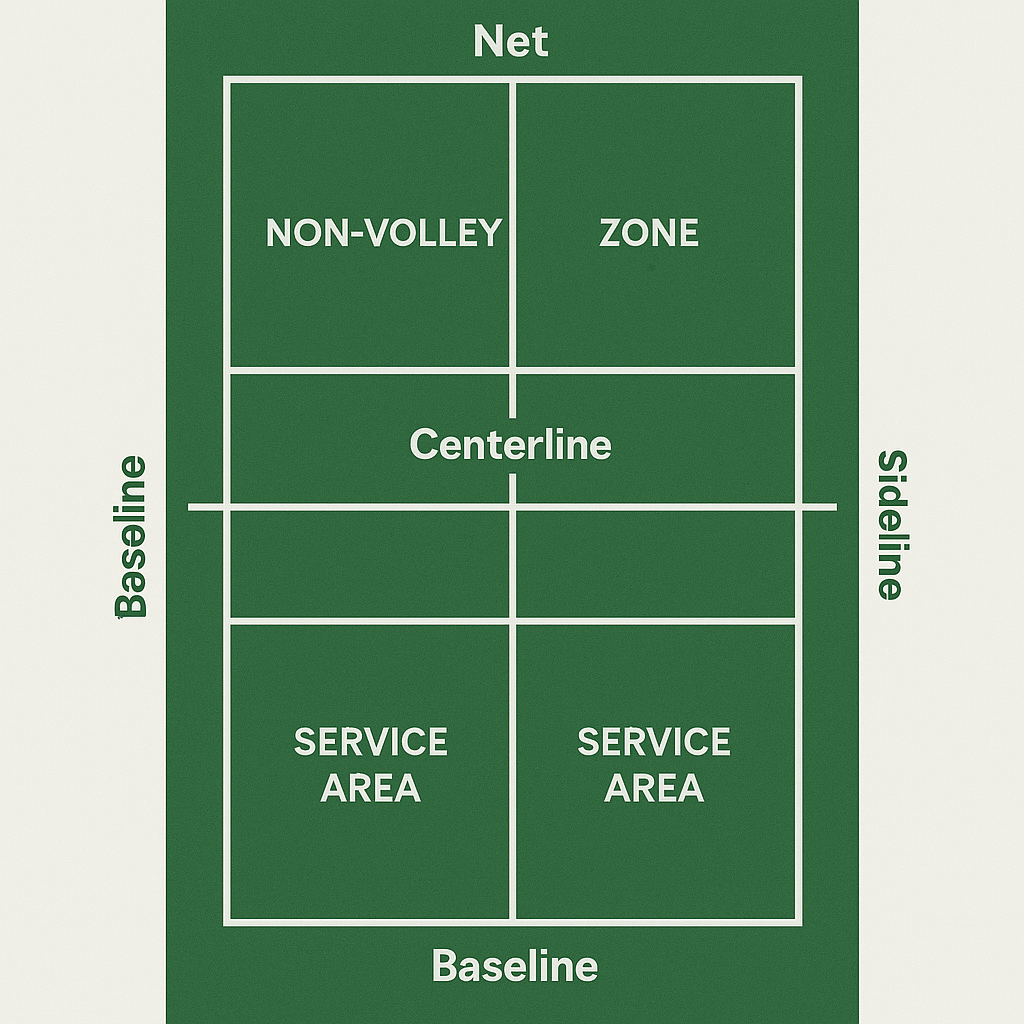
COURT LAYOUT
Baselines: Sit parallel to the net at the end of the court.
Sidelines: Running the length of the court.
NON-VOLLEY ZONE(NVZ): The area on either side of the net bound in by a line parallel to and 7
feet from the net and two sidelines.
CENTERLINE: Extends down the center from the baselines to the NVZ, dividing the court.
SERVICE AREA: The area beyond the NVZ on either side of the centerline, including the
centerline, sideline, and baseline.
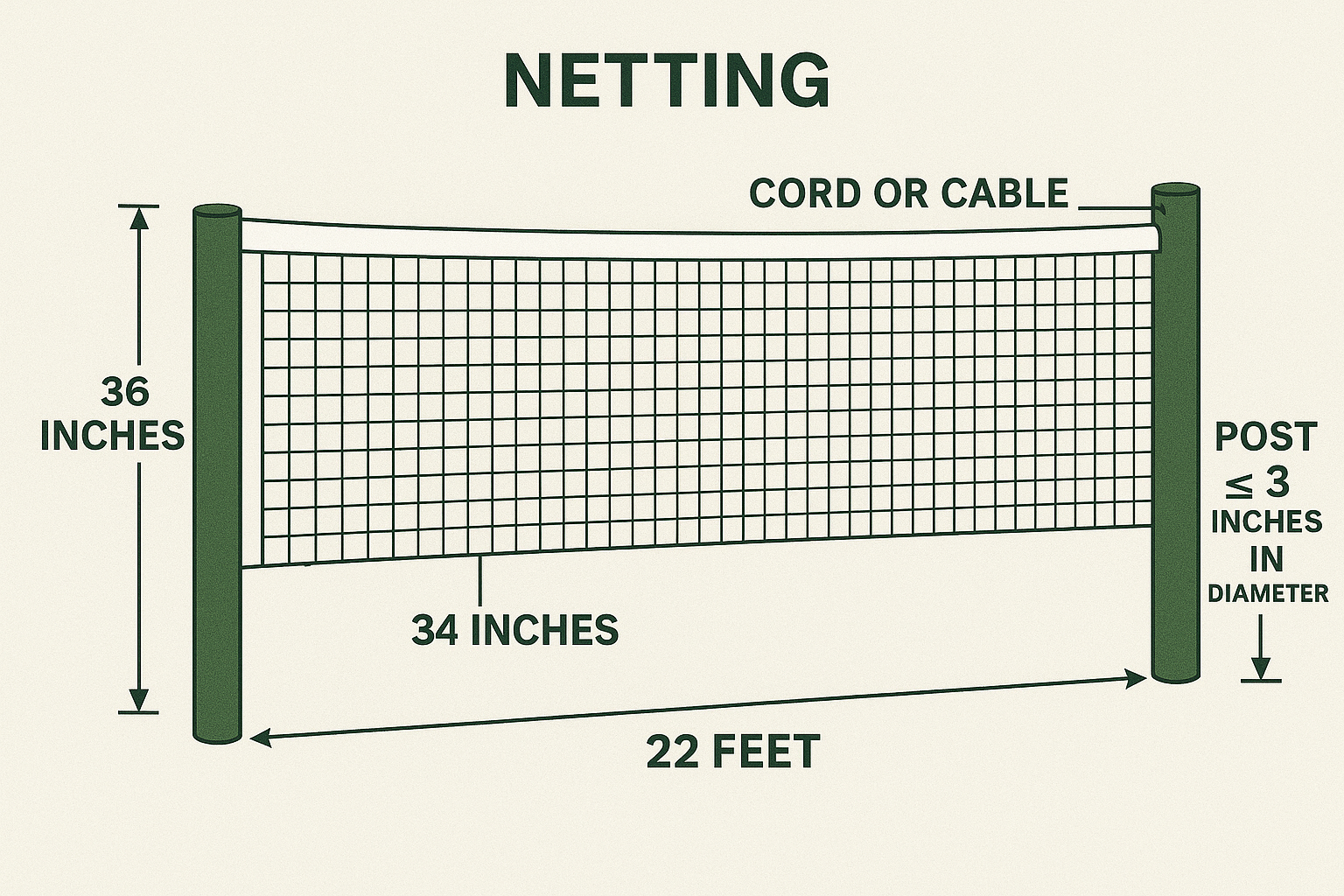
NETTING
Baselines: Sit parallel to the net at the end of the court.
Sidelines: Running the length of the court.
NON-VOLLEY ZONE(NVZ): The area on either side of the net bound in by a line parallel to and 7
feet from the net and two sidelines.
CENTERLINE: Extends down the center from the baselines to the NVZ, dividing the court.
SERVICE AREA: The area beyond the NVZ on either side of the centerline, including the
centerline, sideline, and baseline.
SURFACE
Any hard surface (i.e. concrete or asphalt) will suffice for outdoor gameplay, so long as it’s free
of debris. Grass will not allow the ball to bounce, but driveways can work fine with enough
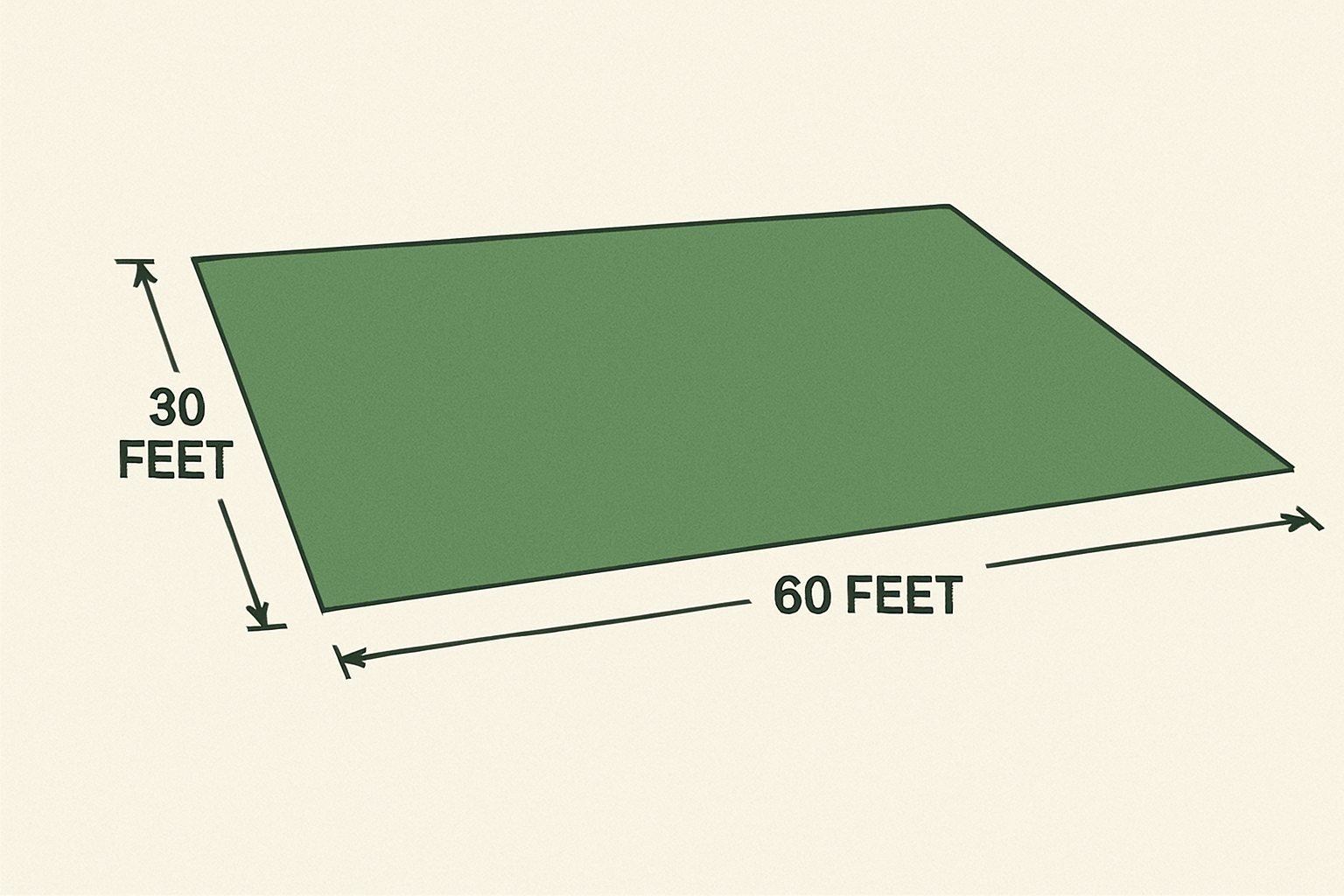
space. Ideally, the surface area should be about 30 feet by 60 feet. For more professional
and permanent outdoor court surfacing, there are sport surfacing systems and services
available.
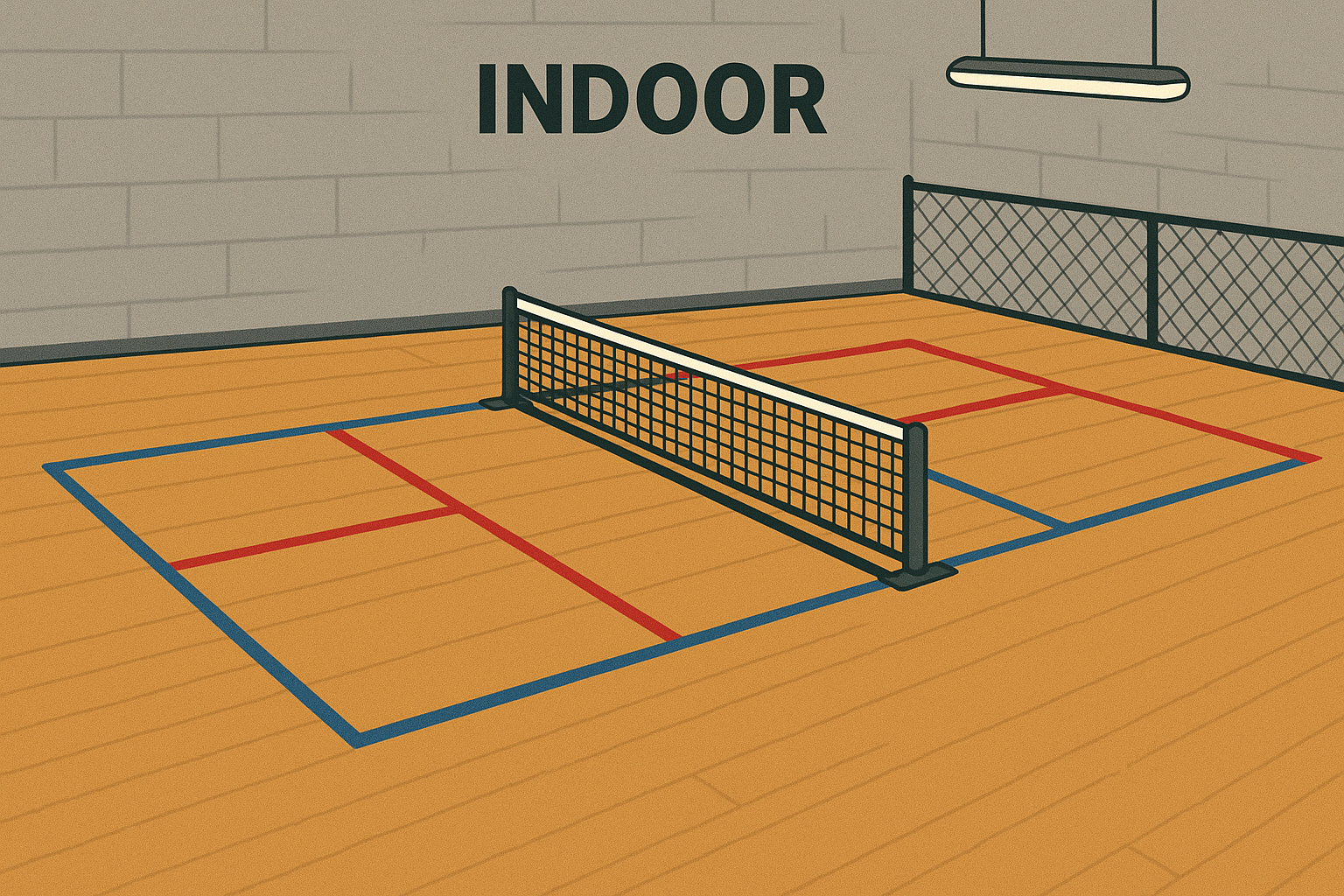
INDOOR
The lines, netting, and space requirements for indoor pickleball play are the same as outdoor, but
different lighting, fencing, and surfacing options are available, and should be considered. Indoor
play allows for fluorescent lighting options that cannot function outside like HID and LED lights
would. Indoor play also allows for different flooring options that are not feasible outdoors, like
hardwood or rubberized surfaces. Fencing considerations can also vary more with indoor courts,
as the surrounding environment does not pose as much a risk as it may outdoors
LINES
Lines can be made with chalk, tape, paint, or even crayons, but generally tape is the best option
for DIY.